





The success of your online store depends on providing customers with seamless and secure payment options. Choosing the right payment gateway for your Magento store isn’t just about processing transactions—it’s about building trust, reducing cart abandonment, and scaling your business effectively.
In this comprehensive guide, we’ll explore everything you need to know about Magento payment gateway integration, from understanding how payment gateways work to implementing the best payment gateways for Magento in 2026. Whether you’re running a Magento 2 store or planning to migrate to Adobe Commerce, this guide will help you make informed decisions about your payment processing solution.
What is a Magento Payment Gateway?
A payment gateway is a service that acts as the critical bridge between your Magento store and financial institutions. When customers complete purchases on your eCommerce site, the payment gateway securely collects, encrypts, and transmits payment information to the payment processor for authorization and settlement.
Think of a payment gateway as a digital point-of-sale terminal for your online business. It handles the complex technical processes that ensure every transaction is secure, compliant, and properly routed through the payment ecosystem. For Magento 2 stores, payment gateways support various payment methods including credit card payment, debit cards, digital wallets like Apple Pay and Amazon Pay, and local payment methods specific to different regions.
How Does a Payment Gateway Work in Magento?
The payment process in Magento follows a sophisticated yet seamless workflow:
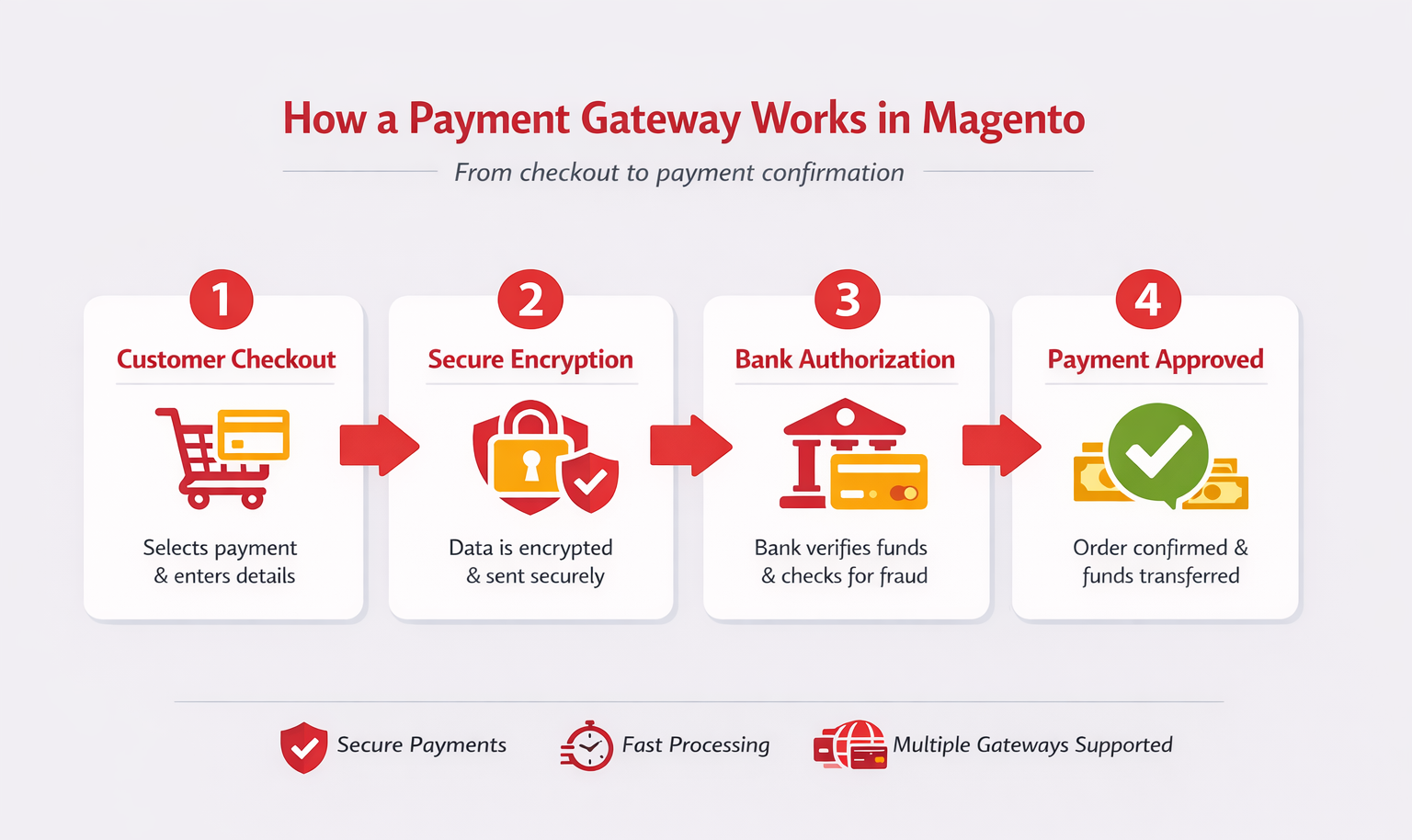
Step 1: Customer Initiates Payment When a customer proceeds to checkout, they select their preferred payment method and enter payment information. The Magento payment method captures this data on the frontend, ensuring a smooth payment experience.
Step 2: Secure Data Transmission The payment gateway encrypts the sensitive payment data using advanced security protocols. This encrypted information is then transmitted to the payment processor, which acts as the intermediary between your Magento store and the customer’s issuing bank.
Step 3: Authorization Request The payment processor forwards the transaction details to the appropriate card networks (Visa, Mastercard, American Express, etc.) or payment service provider. The issuing bank then validates the customer’s account, checking for sufficient funds and potential fraud indicators.
Step 4: Transaction Response The bank sends an authorization response back through the payment gateway. If approved, the payment gateway communicates this to your Magento 2 store, allowing the order to proceed. The funds are then transferred from the customer’s account to your merchant account, typically within a few business days depending on your payment gateway provider.
This entire payment process happens in seconds, but each step is crucial for ensuring that customer payment information remains secure and transactions are processed accurately.
Why Magento Payment Gateway Integration Matters for Your Store
Integrating the right payment gateway for Magento is fundamental to your eCommerce success. Here’s why it deserves your careful attention:
Security and Compliance
The best Magento payment gateways implement robust security measures including PCI DSS compliance, tokenization, and advanced fraud detection. These features protect both your business and your customers from data breaches and fraudulent transactions, building trust and confidence in your Magento payment options.
Customer Experience and Trust
A reliable payment processing solution with recognized payment methods significantly reduces cart abandonment. When customers see familiar and trusted payment options—whether credit cards, PayPal, or Apple Pay—they’re more likely to complete their purchases. The payment gateway you choose directly impacts your conversion rates and customer satisfaction.
Global Expansion Capabilities
The best payment gateways for Magento support multiple payment methods and currencies, enabling you to expand into international markets. Local payment methods are particularly important for global success—customers in different regions have distinct payment preferences, and supporting these can dramatically improve your conversion rates.
Seamless Integration and Scalability
Modern Magento 2 payment gateway integration solutions offer seamless integration with your store’s infrastructure. Whether you choose built-in payment options or third-party gateways, the right solution scales with your business growth while maintaining performance and reliability.
Types of Magento Payment Gateway Integration
Understanding your integration options helps you choose the best approach for your business needs:
Built-in Payment Methods
Magento Adobe Commerce comes with several built-in payment solutions that require minimal setup. These include PayPal, Braintree, and Authorize.Net—all reputable payment gateway providers with proven track records. Built-in payment options are ideal for businesses that want straightforward implementation without extensive technical configuration.
Advantages:
- Quick setup and deployment
- Native compatibility with Magento
- Regular updates from Adobe Commerce
- Lower implementation costs
- Reliable support from established providers
Best For: Small to medium-sized businesses, startups launching their first Magento store, or companies wanting proven payment solutions without custom requirements.
Third-Party Payment Gateway Extensions
The Magento Marketplace offers numerous payment gateway extensions from various payment gateway providers. Popular options include Stripe, Square, Adyen, and regional payment processors that support local payment methods. These extensions expand your Magento payment options beyond the built-in choices.
Advantages:
- Wider variety of payment methods
- Regional payment gateway support
- Specialized features for specific industries
- Competitive transaction fees
- Integration with additional business tools
Best For: Mid-sized businesses, stores targeting specific regions with preferred local payment methods, or businesses requiring specific features not available in built-in options.
Custom Payment Gateway Integration
For enterprise-level Magento stores or businesses with unique requirements, custom Magento payment gateway integration offers maximum flexibility. This approach involves developing a tailored payment solution with the help of experienced Magento developers who understand both payment processing and your specific business requirements.
Advantages:
- Complete customization of payment flow
- Unique payment methods integration
- Optimized for your specific business model
- Enhanced security measures tailored to your needs
- Greater control over the payment experience
Best For: Large enterprises, stores with complex infrastructure, businesses processing high transaction volumes, or companies requiring proprietary payment solutions.
Choosing the Right Payment Gateway for Your Magento 2 Store
Selecting the best Magento payment gateway requires evaluating multiple factors that impact both your operations and customer experience:
Transaction Fees and Pricing Models
Different payment gateway providers charge varying fee structures. Understanding the complete cost is crucial:
- Per-Transaction Fees: Most payment gateways charge a percentage of each transaction plus a fixed fee (e.g., 2.9% + $0.30). For high-volume merchants, these fees significantly impact profitability.
- Monthly Gateway Fees: Some payment processors charge monthly service fees in addition to transaction costs. Evaluate whether these fees are justified by the features and support provided.
- Setup and Integration Costs: Consider one-time costs for payment gateway integration, especially for custom implementations. These can range from minimal for built-in options to substantial for complex custom integrations.
- International Transaction Fees: If you sell globally, compare fees for multi-currency transactions and international payment methods. Some payment service providers offer more competitive rates for global payment processing.
Supported Payment Methods
The variety of payment options directly affects your conversion rates:
- Credit and Debit Cards: Ensure support for major card networks including Visa, Mastercard, American Express, Discover, and regional cards relevant to your markets.
- Digital Wallets: Modern consumers increasingly prefer digital wallets. Support for Apple Pay, Google Pay, Amazon Pay, and Samsung Pay is becoming essential for competitive Magento payment gateways.
- Alternative Payment Methods: Consider buy-now-pay-later services (Klarna, Afterpay), bank transfers, and cryptocurrency options depending on your target audience.
- Local Payment Methods: For international sales, supporting region-specific payment methods like iDEAL (Netherlands), Alipay (China), or SEPA (Europe) can dramatically improve conversion rates.
Security Features and Compliance
Security is non-negotiable in payment processing:
- PCI DSS Compliance: The payment gateway must be PCI DSS compliant, ensuring that customer payment data is handled according to the highest security standards.
- Tokenization: This security feature replaces sensitive payment information with unique tokens, reducing your liability and protecting customer data even if your systems are compromised.
- 3D Secure Authentication: Advanced authentication protocols like 3D Secure 2.0 add an extra security layer while maintaining a smooth payment experience.
- Fraud Detection: The best payment gateways for Magento include sophisticated fraud detection tools that identify suspicious transactions without creating friction for legitimate customers.
Integration Complexity and Technical Requirements
Evaluate your technical capabilities and resources:
- Easy Integration: Built-in payment methods typically offer plug-and-play installation through the Magento admin panel with minimal technical knowledge required.
- Moderate Complexity: Third-party payment gateway extensions may require basic technical skills for installation and configuration but generally include comprehensive documentation.
- Custom Development: Custom Magento 2 payment gateway integration requires significant technical expertise. Consider whether your internal team can handle the integration process or if you need professional payment gateway integration services.
Geographic Coverage and Localization
Consider your current and planned markets:
- Global Reach: Choose a payment gateway that supports global payment processing if you serve international customers. Ensure it handles multiple currencies seamlessly.
- Local Payment Methods: Customers prefer familiar payment options. A payment gateway that offers local payment methods in your target regions will convert better than one offering only international options.
- Regional Regulations: Different regions have specific payment regulations. Ensure your payment solution complies with local requirements, especially in markets like Europe (PSD2) or China.
Customer Support and Documentation
Reliable support ensures smooth operations:
- 24/7 Support: Payment issues can occur anytime. Choose payment gateway providers offering round-the-clock support through multiple channels.
- Technical Documentation: Comprehensive documentation makes payment gateway integration smoother and helps your team troubleshoot issues quickly.
- Developer Community: Active developer communities provide valuable resources, plugins, and solutions for common integration challenges.
Best Magento Payment Gateways in 2026
Let’s explore the top payment gateways for your Magento 2 store, examining their features, pricing, and ideal use cases:
PayPal
PayPal remains one of the most popular payment gateways for Magento, trusted by millions of merchants and customers worldwide. Its built-in integration with Magento Adobe Commerce makes it an accessible choice for businesses of all sizes.
Key Features:
- Accept credit card payments, debit cards, and PayPal account payments
- PayPal Express Checkout for streamlined payment process
- Support for various payment methods including digital wallets
- PayPal Credit for installment payments
- Multi-currency support across 200+ countries
- Robust fraud protection and buyer/seller protection programs
Pricing: Transaction fees vary by region. In the US, standard rates are 2.9% + $0.30 per transaction for domestic payments. International and currency conversion fees apply for cross-border transactions.
Best For: Small to medium businesses, international sellers, stores wanting recognized brand trust, and merchants seeking easy Magento integration.
Integration: Available as a built-in payment option in Magento. Configuration is straightforward through the Magento admin panel, making it an ideal starting point for new stores.
Braintree
Owned by PayPal, Braintree offers a comprehensive payment solution designed for businesses requiring advanced features and scalability. It’s a popular choice for Magento 2 payment gateway integration among growing businesses.
Key Features:
- Support for credit cards, debit cards, PayPal, Venmo, and digital wallets
- Apple Pay, Google Pay, and Samsung Pay integration
- Advanced fraud protection with customizable risk management
- Recurring billing for subscription-based businesses
- Split payments and marketplace functionality
- Developer-friendly APIs for custom implementations
- Dynamic 3D Secure authentication
Pricing: 2.59% + $0.49 per transaction for cards and digital wallets. PayPal transactions follow PayPal pricing. No monthly fees or setup costs for standard accounts.
Best For: Growing businesses, subscription services, marketplaces, and stores requiring flexible payment options with advanced features.
Integration: Built-in to Magento with seamless integration. Offers additional customization options for developers needing tailored payment experiences.
Authorize.Net
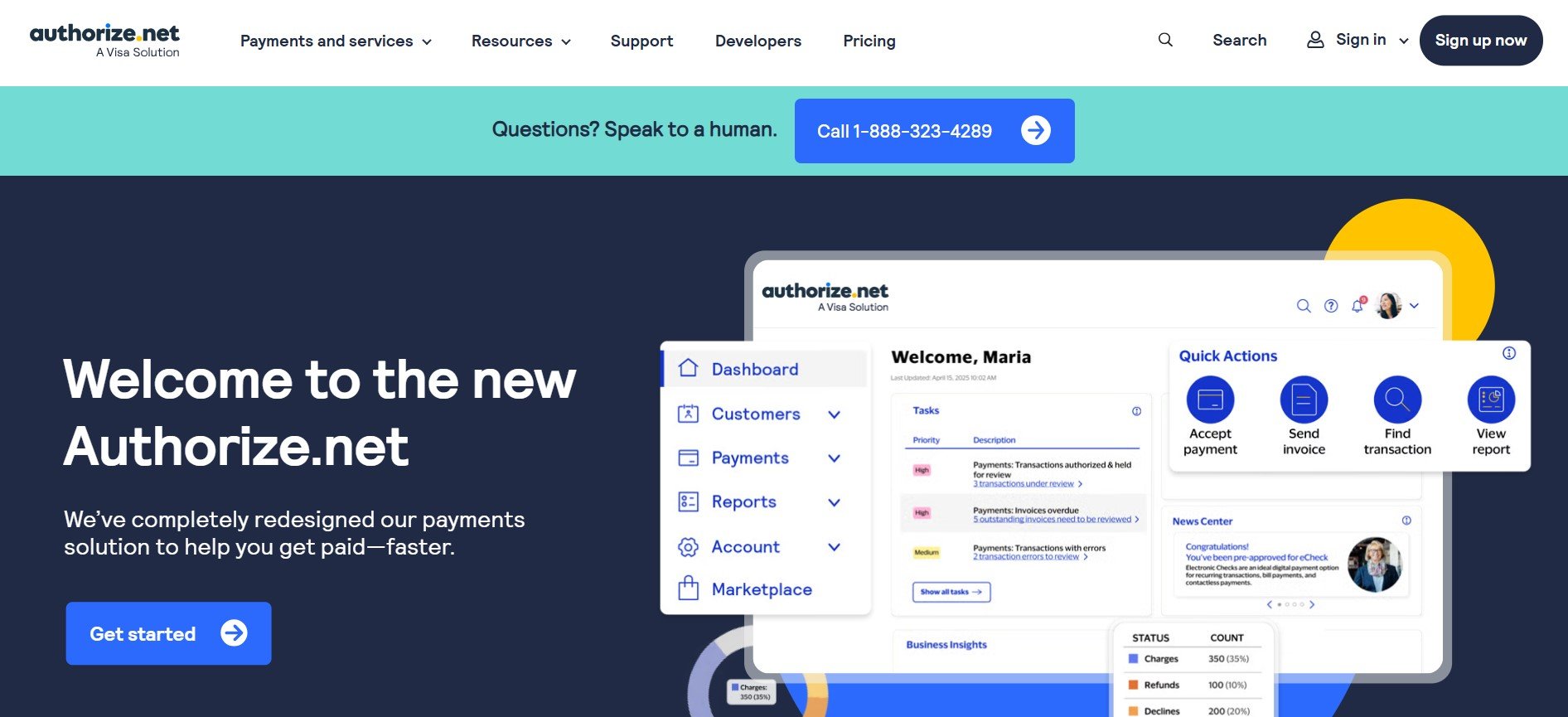
As one of the oldest and most established payment gateway providers, Authorize.Net brings decades of experience to Magento payment processing. It’s particularly popular in North America for its reliability and comprehensive feature set.
Key Features:
- Accept credit cards, debit cards, eChecks, and Apple Pay
- Virtual Point of Sale for phone orders
- Customer Information Manager for secure data storage
- Advanced Fraud Detection Suite
- Recurring billing and automated payments
- Accept payments through Magento credit card forms
- Invoicing capabilities for B2B transactions
Pricing: $25 monthly gateway fee plus 2.9% + $0.30 per transaction for the all-in-one package. Gateway-only option available for $0.10 per transaction plus daily batch fee if you have a separate merchant account.
Best For: Established businesses, B2B merchants, subscription services, and companies requiring robust fraud protection.
Integration: Available as built-in payment in Magento. Straightforward setup through admin panel with extensive documentation available.
Stripe
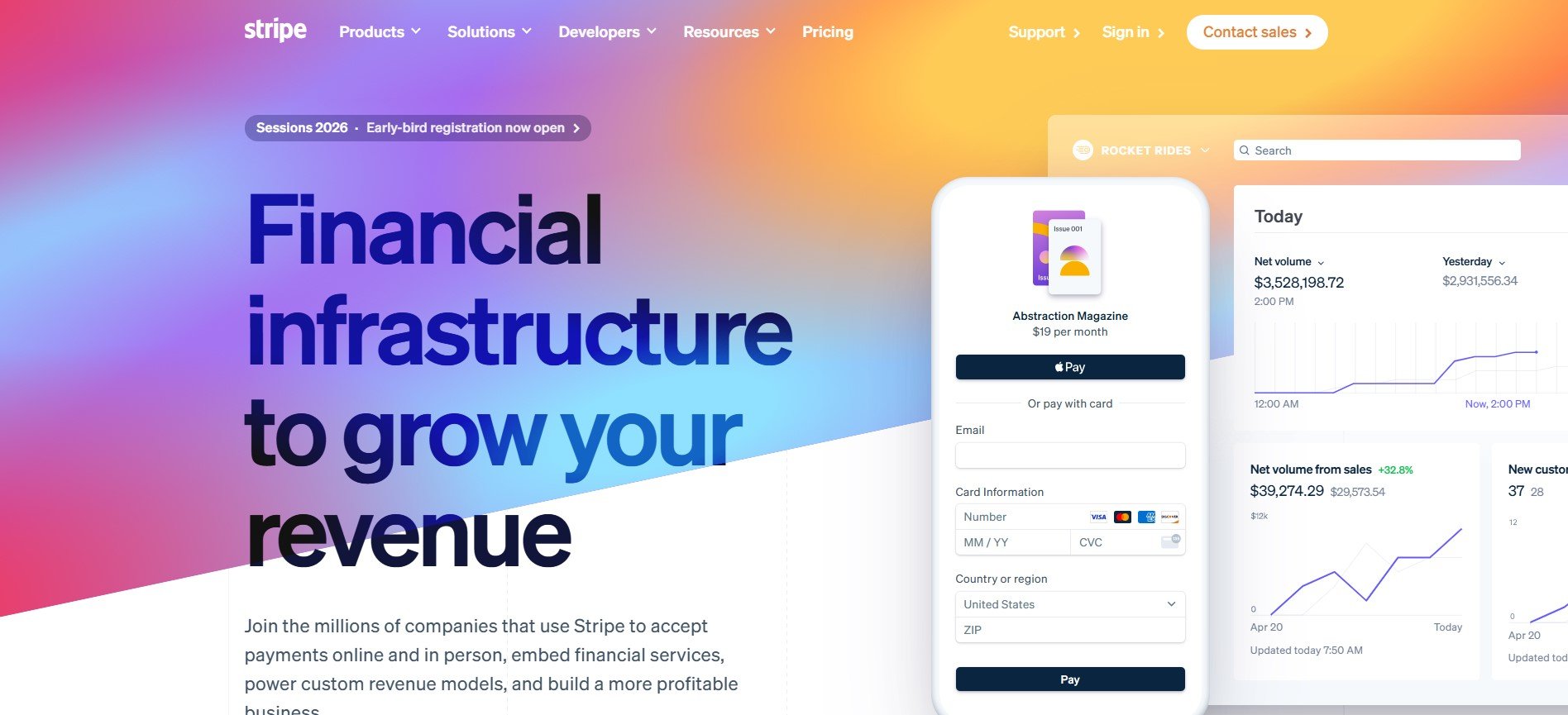
Stripe has rapidly become one of the best Magento payment gateways for tech-savvy businesses. Its powerful APIs and extensive documentation make it ideal for custom payment implementations.
Key Features:
- Comprehensive payment methods support including cards, wallets, and local payment methods
- Support for over 135 currencies
- One-click payments with saved card information
- Subscription billing and invoicing
- Advanced fraud detection with machine learning
- Extensive APIs for custom integration
- Stripe Radar for fraud prevention
- Support for various payment methods globally
Pricing: 2.9% + $0.30 per successful transaction in the US. Pricing varies for international cards and currency conversion. No setup fees or monthly charges.
Best For: Tech-forward businesses, SaaS companies, subscription services, and stores requiring customized payment experiences.
Integration: Available through third-party extensions on Magento Marketplace. Requires moderate technical knowledge for optimal implementation but offers extensive customization options.
Square
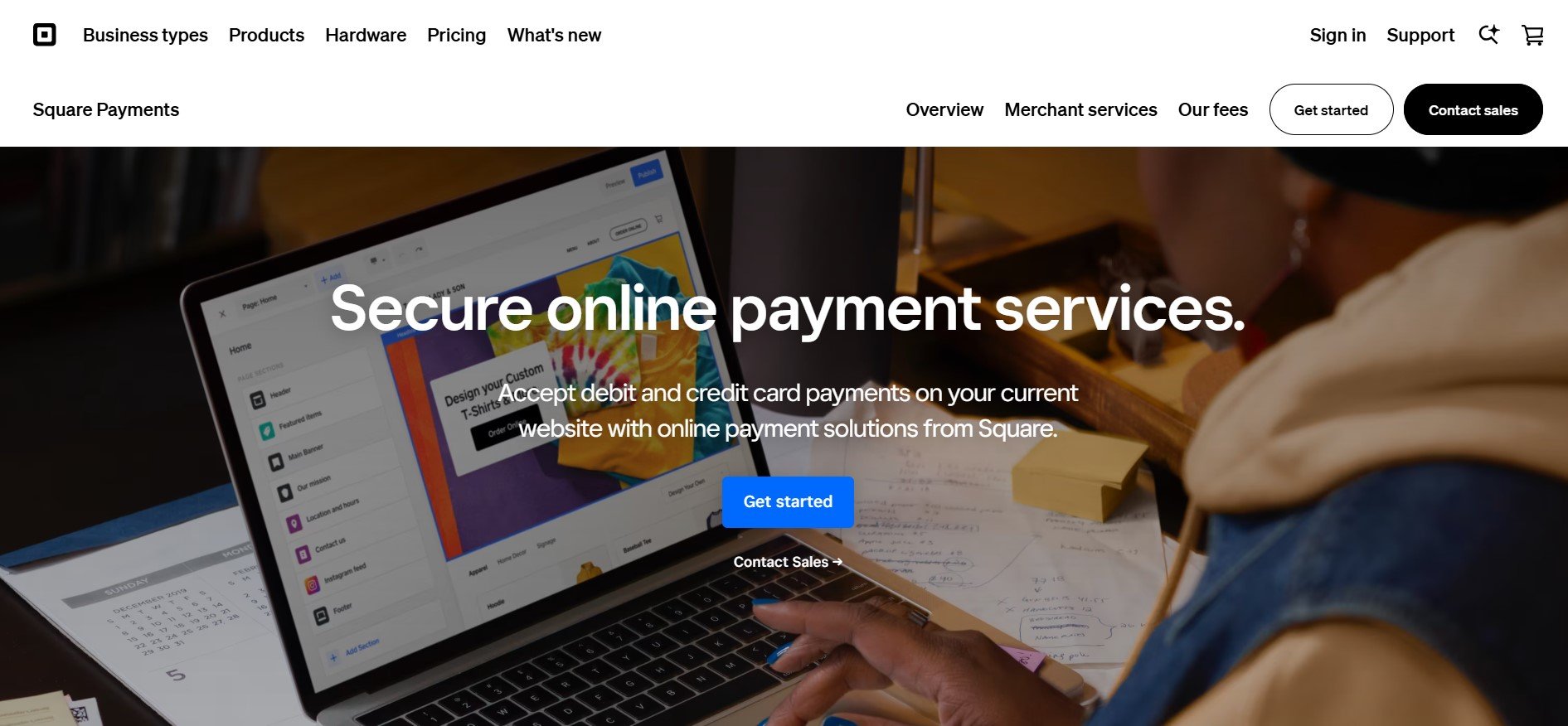
Square provides an excellent Magento payment processing solution for businesses operating both online and offline. Its unified approach makes it ideal for omnichannel retailers.
Key Features:
- Process payments online and in-person with synced data
- Accept credit cards, debit cards, and contactless payments
- Flat-rate pricing with transparent costs
- Instant deposits with Square Instant Transfer
- Built-in payment analytics and reporting
- Square Reader and POS hardware integration
- Automatic inventory synchronization
- Gift card support
Pricing: 2.6% + $0.10 per transaction for card-present, 2.9% + $0.30 for online payments. Optional monthly plans available for advanced features.
Best For: Omnichannel retailers, brick-and-mortar stores with online presence, small to medium businesses, and merchants wanting integrated POS systems.
Integration: Third-party extensions available for Magento 2. Integration connects Square’s online and offline payment capabilities with your Magento store.
Adyen

Adyen excels at supporting global payment processing with its unified commerce platform. It’s one of the best payment gateways for Magento stores with significant international presence.
Key Features:
- Support for 250+ payment methods worldwide
- Process payments in 150+ currencies
- Local payment methods for major markets
- Unified platform for online, mobile, and in-store payments
- Advanced risk management and fraud detection
- Real-time data and analytics
- Optimized for mobile payment experience
- Direct acquiring for lower fees
Pricing: Interchange++ pricing model starting at 0.60% + $0.12 per transaction in the US. Pricing varies by region and payment method.
Best For: Large enterprises, international businesses, high-volume merchants, and companies requiring advanced payment analytics.
Integration: Available through official Magento extension or custom integration. Recommended for businesses with technical resources for optimal implementation.
Amazon Pay
Amazon Pay leverages the trust and convenience of Amazon’s platform, offering familiar payment experience to millions of customers who already have Amazon accounts.
Key Features:
- One-click checkout for Amazon customers
- Access to Amazon’s fraud protection
- Supports credit cards, debit cards, and Amazon accounts
- Voice payments through Alexa-enabled devices
- Multi-currency support
- Recurring payment capabilities
- Mobile-optimized checkout experience
Pricing: Fees vary by country and transaction volume. In the US, standard rates are 2.9% + $0.30 per transaction. Custom pricing available for high-volume merchants.
Best For: Retailers targeting Amazon customers, stores wanting to reduce checkout friction, and businesses benefiting from Amazon’s brand trust.
Integration: Official Magento extension available. Simple setup process that connects your Magento payment options with Amazon’s infrastructure.
2Checkout (Verifone)

2Checkout (now operating under Verifone) specializes in international payment processing, making it an excellent choice for Magento stores with global ambitions.
Key Features:
- Accept payments in 200+ countries
- Support for 87 currencies
- Local payment methods across regions
- Comprehensive fraud protection
- Recurring billing and subscription management
- Digital product delivery
- Automatic currency conversion
- Multi-language checkout support
Pricing: 3.5% + $0.35 per transaction for basic plan. Custom pricing available for high-volume businesses. No setup or monthly fees.
Best For: International sellers, digital product vendors, subscription businesses, and companies targeting emerging markets.
Integration: Magento extension available through marketplace. Configuration supports multiple store views for international operations.
Worldpay
Worldpay (now part of FIS) offers one of the most comprehensive payment solutions for Magento, with strong presence in UK and international markets.
Key Features:
- Accept payments in 120+ currencies
- Support for alternative payment methods
- Advanced fraud management tools
- Recurring billing capabilities
- PCI compliance and security
- Multi-channel payment processing
- Local payment methods support
- Dedicated merchant support
Pricing: Varies by region and business size. Custom quotes based on transaction volume and requirements. Monthly fees may apply.
Best For: UK businesses, international merchants, enterprises, and companies requiring comprehensive fraud protection.
Integration: Official Magento extension with straightforward configuration. Enterprise implementations may require professional integration services.
Klarna

Klarna has revolutionized eCommerce payments with flexible payment options that increase average order values and conversion rates for Magento stores.
Key Features:
- Pay later in installments
- Pay in 30 days option
- Pay now for direct purchases
- No interest for consumers
- Risk assessment handled by Klarna
- Smooth checkout experience
- Mobile-optimized payment flow
- Integration with major eCommerce platforms
Pricing: Fees vary by payment method and country. Typically ranges from 2.5% to 3.5% per transaction. Klarna assumes the credit risk.
Best For: Fashion retailers, high-ticket items, businesses targeting millennial and Gen Z consumers, stores wanting to increase average order value.
Integration: Official Magento extension available. Simple setup that adds flexible payment options to your checkout process.
Magento 2 Payment Gateway Integration Process
Implementing a payment gateway in Magento 2 requires careful planning and execution. Here’s a comprehensive step-by-step guide to ensure successful integration:
Step 1: Choose Your Payment Gateway
Before beginning the integration process, thoroughly evaluate your options based on:
- Your target markets and required payment methods
- Transaction volume and pricing considerations
- Technical capabilities of your team
- Security and compliance requirements
- Customer preferences and expectations
Research multiple payment gateway providers, compare features, and consider starting with a sandbox environment to test capabilities before committing.
Step 2: Prepare Your Magento Environment
Proper preparation prevents integration issues:
- Backup Your Store: Create complete backups of your Magento database and files. Never perform payment gateway integration on a live store without backups.
- Enable Developer Mode: Set Magento to developer mode for better error reporting during installation:
php bin/magento deploy:mode:set developer - Check System Requirements: Verify that your Magento version, PHP version, and server configuration meet the payment gateway’s requirements. If you need assistance with technical setup or Magento 2 development services, consider consulting with experts.
- Review Security Settings: Ensure your store has a valid SSL certificate and HTTPS is enforced. Payment gateways require secure connections for processing transactions.
Step 3: Obtain Payment Gateway Credentials
Register for an account with your chosen payment service provider:
- Create Merchant Account: Complete the merchant application process, which may involve business verification and compliance checks.
- Get API Credentials: Once approved, you’ll receive API keys, merchant IDs, and other credentials necessary for connecting your Magento store to the payment processor.
- Configure Payment Gateway Settings: In your payment gateway provider’s dashboard, configure settings for transaction types (authorize, capture, or both), fraud filters, and notification preferences.
- Set Up Test Environment: Most payment gateways offer sandbox or test environments. Configure these first to test the integration before processing real transactions.
Step 4: Install the Payment Gateway Extension
The installation method depends on whether you’re using built-in payment or third-party extensions:
- For Built-in Payment Methods: Navigate to Stores > Configuration > Sales > Payment Methods in your Magento admin panel. Find your payment gateway and enable it.
- For Third-Party Extensions:
Via Magento Marketplace:
- Purchase or download the extension from Magento Marketplace
- Install using Web Setup Wizard or command line
- Run setup upgrade:
php bin/magento setup:upgrade - Deploy static content:
php bin/magento setup:static-content:deploy - Clear cache:
php bin/magento cache:clean
Via Composer:
composer require vendor/payment-gateway-module

php bin/magento setup:upgrade

php bin/magento setup:di:compile

php bin/magento setup:static-content:deploy

php bin/magento cache:flush
Manual Installation: Upload extension files to the appropriate directory in app/code/, then run upgrade commands.
Step 5: Configure Payment Method Settings
Access the payment gateway configuration in your Magento admin panel:
Basic Configuration:
- Enable the payment method
- Enter API credentials (API keys, merchant ID, etc.)
- Select payment action (authorize only, authorize and capture, or order)
- Configure allowed countries and currencies
- Set minimum and maximum order totals if applicable
Advanced Settings:
- Configure credit card types accepted
- Set up custom payment instructions
- Define sort order (how it appears in checkout)
- Enable debug mode for troubleshooting
- Configure transaction descriptions
Security Configuration:
- Enable CVV verification
- Set up address verification (AVS)
- Configure 3D Secure authentication if available
- Set fraud detection rules
Step 6: Configure Checkout Experience
Optimize how the payment option appears to customers:
Customize Payment Method Display:
- Set descriptive payment method title
- Add payment logos and icons
- Create clear payment instructions
- Configure one-page vs. multi-step checkout
Ensure Mobile Optimization: Test the payment process on mobile devices to ensure a seamless experience. Many customers shop on mobile, so mobile-optimized payments are crucial.
Set Up Multiple Payment Methods: If offering various payment options, configure them all and test that they work together without conflicts.
Step 7: Test the Payment Gateway
Comprehensive testing prevents issues after launch:
Use Sandbox/Test Mode: Enable test mode and use test credit card numbers provided by the payment gateway to simulate transactions.
Test Common Scenarios:
- Successful authorization and capture
- Declined transactions
- Partial captures and refunds
- Void operations
- Various payment methods (cards, wallets, etc.)
- Different currencies if supporting international payments
Test Edge Cases:
- Network timeouts
- Duplicate transactions
- Mixed cart scenarios
- Guest checkout vs. registered users
- Coupon codes with payments
- Multiple shipping addresses
Verify Backend Processing:
- Check that orders are created correctly
- Verify transaction records in Magento
- Confirm transaction appears in payment gateway dashboard
- Test order management functions (refund, void, capture)
- Verify email notifications sent correctly
Step 8: Security and Compliance Check
Before going live, ensure complete security compliance:
PCI DSS Compliance: Even with a PCI-compliant payment gateway, your Magento store must maintain PCI compliance. This includes:
- Using secure hosting
- Keeping Magento and extensions updated
- Implementing proper access controls
- Regular security scanning
- Following PCI self-assessment guidelines
Data Protection:
- Ensure credit card data is not stored unnecessarily
- Use tokenization where available
- Encrypt sensitive data transmission
- Implement proper error logging (without exposing sensitive data)
- Configure proper file permissions
Legal Compliance:
- Add terms and conditions for payments
- Create privacy policy covering payment data
- Ensure compliance with regional regulations (GDPR, PCI, etc.)
- Display security badges appropriately
Step 9: Deploy to Production
Once testing is complete and security verified:
Switch to Production Mode:
php bin/magento deploy:mode:set production
php bin/magento cache:clean
Activate Live Payment Gateway:
- Switch from sandbox/test credentials to live credentials
- Disable debug mode
- Verify SSL certificate is active and valid
- Ensure proper error logging without exposing sensitive information
Monitor Initial Transactions: Closely watch the first several transactions to identify any issues quickly. Check both Magento order management and payment gateway dashboard to ensure data synchronizes correctly.
Step 10: Ongoing Maintenance
Payment gateway integration requires ongoing attention:
Regular Updates:
- Keep payment extensions updated
- Monitor Magento and Adobe Commerce updates
- Update payment gateway credentials if they change
- Review and update security certificates
Performance Monitoring:
- Track transaction success rates
- Monitor payment processing speed
- Review declined transaction patterns
- Check for integration errors in logs
Customer Support:
- Train support staff on payment issues
- Create documentation for common payment problems
- Monitor customer feedback about checkout experience
- Respond quickly to payment-related complaints
Common Challenges in Magento Payment Gateway Integration
Understanding potential obstacles helps you prepare for smooth implementation:
Technical Compatibility Issues
- Challenge: Not all payment gateways integrate seamlessly with every Magento version or third-party extension configuration.
- Solution: Before choosing a payment gateway, verify compatibility with your specific Magento 2 version. Check extension documentation, read reviews from merchants with similar setups, and test thoroughly in a staging environment before deployment.
Currency and Multi-Store Configuration
- Challenge: Managing multiple currencies or store views with different payment methods can create complex configuration scenarios.
- Solution: Carefully plan your multi-store payment architecture. Test each store view and currency combination individually. Some payment gateways handle multi-currency better than others, so choose accordingly if this is critical for your business.
Security and Compliance Requirements
- Challenge: Meeting PCI DSS compliance requirements while maintaining usability can be difficult, especially for small businesses.
- Solution: Choose payment gateways that handle most compliance burden (hosted payment pages, tokenization). Work with experienced Magento consultants familiar with PCI requirements. Consider professional security audits for high-risk implementations.
Performance and Loading Speed
- Challenge: Adding payment gateway integration can impact page load times, particularly if loading external scripts or resources.
- Solution: Optimize how payment scripts load. Use asynchronous loading where possible. Consider inline checkout versus redirects based on performance impact. Monitor page speed metrics after integration.
Customer Authentication Requirements
- Challenge: Strong Customer Authentication (SCA) and 3D Secure requirements can add friction to checkout while being mandatory in many regions.
- Solution: Implement 3D Secure 2.0 (3DS2) rather than legacy versions—it provides better user experience while meeting regulatory requirements. Test authentication flows thoroughly across different card issuers and scenarios.
Refund and Void Processing
- Challenge: Different payment gateways handle refunds differently, and Magento’s credit memo process doesn’t always align perfectly with payment gateway requirements.
- Solution: Thoroughly understand your payment gateway’s refund policies and timing. Test refund scenarios extensively. Document refund procedures for your support team. Consider partial refund scenarios and their implications.
Duplicate Transaction Handling
- Challenge: Network issues or impatient customers clicking multiple times can result in duplicate charge attempts.
- Solution: Implement duplicate transaction protection at both Magento and payment gateway levels. Use idempotency keys where supported. Educate customers about the process and discourage multiple submission.
Advanced Payment Features for Magento Stores
Beyond basic payment processing, modern Magento payment gateways offer advanced capabilities:
Recurring Payments and Subscriptions
For subscription-based businesses, recurring billing is essential. The best Magento payment gateways support:
- Automated recurring charges
- Flexible billing cycles
- Proration for mid-cycle changes
- Dunning management for failed payments
- Customer self-service for subscription management
Choose a payment gateway that natively supports subscriptions if this is core to your business model. While extensions can add functionality, native support typically provides more reliable operation.
Tokenization and Stored Payment Methods
Allow customers to securely save payment information for faster future purchases:
- Store payment credentials as tokens
- One-click checkout for returning customers
- Manage multiple payment methods
- Secure card-on-file updating
Tokenization significantly improves conversion rates for repeat customers while maintaining PCI compliance by ensuring sensitive card data never touches your servers.
Fraud Detection and Prevention
Advanced fraud protection goes beyond basic AVS and CVV checks:
- Machine learning fraud detection
- Behavioral analysis
- Device fingerprinting
- Velocity checks
- Customizable risk rules
- Manual review queues for suspicious orders
Investing in robust fraud protection saves money and reduces chargeback rates. The best payment gateways for Magento include sophisticated fraud tools or integrate with specialized fraud prevention services.
Payment Methods Optimization
Enhance conversion by presenting the right payment option to each customer:
- Dynamic payment method display based on location
- Smart payment method routing
- Currency-based payment options
- Device-specific payment methods (show Apple Pay only on Apple devices)
- Local payment methods for regional customers
This optimization ensures customers always see relevant, trusted payment options, improving conversion rates significantly.
Split Payments and Marketplace Features
For marketplace or complex B2B scenarios:
- Split transactions across multiple vendors
- Escrow and delayed settlement
- Commission handling
- Multi-merchant support
- Sub-merchant onboarding
If running a marketplace on Magento, ensure your payment gateway supports these advanced features natively rather than requiring complex custom development.
Payment Analytics and Reporting
Comprehensive reporting helps optimize your payment strategy:
- Transaction success/failure rates
- Payment method performance
- Decline code analysis
- Settlement reporting
- Chargeback tracking
- Revenue analytics by payment method
Use these insights to identify issues early, optimize payment method selection, and understand customer payment preferences.
Best Practices for Magento Payment Gateway Implementation
Following these best practices ensures optimal payment gateway performance:
Offer Multiple Payment Methods
Research shows customers abandon carts when their preferred payment method isn’t available. Provide variety including:
- Major credit cards (Visa, Mastercard, American Express)
- Debit cards
- Digital wallets (Apple Pay, Google Pay, PayPal)
- Buy-now-pay-later options (Klarna, Afterpay)
- Local payment methods for your markets
- Bank transfers for B2B customers
The right mix depends on your target audience and markets, but offering options significantly improves conversion rates.
Optimize the Payment Experience
Checkout optimization directly impacts your bottom line:
- Minimize checkout steps
- Use one-page checkout where appropriate
- Show payment security badges
- Display accepted payment methods clearly
- Provide clear error messages
- Enable guest checkout
- Save customer information for faster repeat purchases
- Optimize for mobile devices
Even small improvements in checkout experience can yield significant revenue increases.
Maintain PCI Compliance
Security cannot be compromised:
- Work with PCI-compliant payment gateway providers
- Never store full credit card numbers
- Use tokenization wherever possible
- Implement proper access controls
- Keep Magento and all extensions updated
- Perform regular security audits
- Train staff on security protocols
- Use hosted payment fields or pages when appropriate
PCI compliance protects your business and customers while being a legal requirement for payment processing.
Monitor Payment Performance
Proactive monitoring prevents revenue loss:
- Track transaction success rates daily
- Monitor decline reasons and patterns
- Check payment processing speeds
- Review customer feedback about checkout
- Analyze conversion rates by payment method
- Watch for unusual patterns that might indicate fraud or technical issues
Set up alerts for significant changes in key metrics so you can respond quickly to issues.
Provide Clear Payment Information
Transparency builds trust:
- Display all fees clearly upfront
- Show security certifications and badges
- Explain payment options in simple terms
- Provide contact information for payment questions
- Create clear refund and return policies
- Show accepted currencies
- Display payment icons prominently
Customers need confidence in your payment process. Clear communication reduces concerns and abandoned carts.
Test Regularly
Ongoing testing catches issues before they affect customers:
- Test after Magento updates
- Test when payment gateway providers make changes
- Perform quarterly full checkout tests
- Test all payment methods periodically
- Verify mobile checkout experience
- Test international transactions if applicable
- Review error handling
Make payment testing part of your regular maintenance schedule, not just a one-time setup task.
Keep Documentation Updated
Maintain comprehensive documentation:
- Payment gateway configuration settings
- API credentials storage procedures
- Troubleshooting procedures
- Contact information for payment support
- Change history
- Testing procedures
- Known issues and workarounds
Good documentation helps your team resolve issues quickly and ensures smooth operations during staff changes.
Working with Payment Gateway Integration Services
For complex implementations, professional payment gateway integration services provide valuable expertise:
When to Consider Professional Services
You may benefit from professional integration services if:
- Your store has complex technical architecture
- You require custom payment workflows
- You’re integrating multiple payment gateways
- You lack in-house Magento expertise
- You’re implementing marketplace payment features
- You need advanced fraud protection customization
- You’re expanding to new international markets
- You’re migrating from another platform
What to Look for in Integration Partners
Choose partners with:
- Proven Magento payment gateway integration experience
- Case studies demonstrating successful implementations
- Understanding of PCI compliance requirements
- Knowledge of various payment gateway APIs
- Experience with your specific business model
- Strong communication and project management
- Post-implementation support
Services Typically Provided
Professional integration services usually include:
- Assessment and Planning: Analyzing your business needs and recommending suitable payment gateways
- Custom Development: Building tailored integration for unique requirements
- Security Implementation: Ensuring PCI compliance and implementing security best practices
- Testing: Comprehensive testing across scenarios and payment methods
- Documentation: Creating detailed documentation for your team
- Training: Educating your staff on payment management
- Ongoing Support: Providing maintenance and troubleshooting assistance
The Future of Magento Payment Processing
As we progress through 2025, several trends are shaping the future of Magento payment gateways:
Increased Adoption of Digital Wallets
Digital wallet usage continues growing rapidly. Apple Pay, Google Pay, Amazon Pay, and emerging options are becoming expected payment methods rather than nice-to-have alternatives. The best payment gateways for Magento now prioritize seamless wallet integration.
Buy Now, Pay Later Expansion
BNPL services like Klarna, Afterpay, and Affirm have moved from niche to mainstream. These flexible payment options particularly resonate with younger consumers and significantly increase average order values. Expect wider adoption and integration across various payment methods.
Enhanced Fraud Prevention
AI-powered fraud detection is becoming more sophisticated, protecting merchants while reducing false positives that frustrate legitimate customers. Machine learning algorithms analyze vast datasets to identify patterns humans might miss, creating more secure payment transactions without adding friction.
Cryptocurrency Payment Integration
While still emerging, cryptocurrency payment options are gaining traction. Some forward-thinking Magento stores are beginning to integrate crypto payment gateways, particularly for international transactions where they offer advantages over traditional methods.
Voice and Biometric Authentication
Voice-activated payments through devices like Alexa and biometric authentication (fingerprint, facial recognition) for payment transactions are becoming more common. These technologies improve security while making payments faster and more convenient.
Unified Commerce Solutions
The line between online and offline payments continues blurring. Payment gateways increasingly offer omnichannel capabilities, allowing consistent payment experiences whether customers shop online, in-store, or through mobile apps.
Real-Time Payment Processing
Instant payment settlement is becoming more common, particularly with newer payment methods. Real-time payments improve cash flow for merchants while providing instant gratification for customers.
Enhanced Mobile Payment Experience
With mobile commerce growing, payment gateways are optimizing specifically for mobile devices. Features like saved payment credentials, one-tap checkout, and mobile wallet integration are becoming standard rather than premium features.
Conclusion
Choosing and implementing the right Magento payment gateway is a critical decision that directly impacts your store’s success, customer satisfaction, and revenue. The best Magento payment gateways offer seamless integration with Magento, support various payment methods, provide robust security, and deliver reliable payment processing that scales with your business growth.
Whether you opt for built-in payment solutions like PayPal and Braintree, third-party providers like Stripe or Adyen, or custom Magento 2 payment gateway integration, the key is selecting a payment solution that aligns with your business model, serves your customers’ preferences, and provides the flexibility to adapt as payment technologies evolve.
By understanding how payment gateway work, carefully evaluating options based on your specific needs, and following best practices for integration and optimization, you can create a payment experience that builds trust, reduces cart abandonment, and supports your eCommerce growth objectives. The payment gateway you choose today should not only meet your current needs but also position you for future success as your Magento store grows and payment technologies continue advancing.
For businesses requiring expert assistance with Magento payment gateway integration, partnering with experienced Magento development professionals ensures your payment processing solution works flawlessly from day one, giving you peace of mind and your customers a seamless, secure checkout experience that encourages repeat business.
Frequently Asked Questions
What is the best payment gateway for Magento 2?
The best Magento 2 payment gateway depends on your specific business needs. For small businesses, PayPal or Braintree offer reliable built-in options. For growing businesses, Stripe provides excellent flexibility. International merchants benefit from Adyen’s global reach. Evaluate based on your transaction volume, target markets, technical capabilities, and required features.
How much does Magento payment gateway integration cost?
Costs vary significantly based on the integration approach. Built-in payment methods like PayPal are free to integrate (you only pay transaction fees). Third-party extensions typically range from free to $300 one-time cost. Custom Magento payment gateway integration can cost $5,000-$50,000+ depending on complexity. Transaction fees range from 2.5% to 3.5% plus fixed fees per transaction.
Is Magento payment gateway integration secure?
Yes, when properly implemented. The best Magento payment gateways are PCI DSS compliant and use advanced security measures including encryption, tokenization, and fraud detection. However, your Magento store must also maintain security best practices, including regular updates, proper configuration, and SSL certification. Security is a shared responsibility between the payment gateway provider and your store implementation.
Can I use multiple payment gateways in Magento?
Absolutely. Magento supports multiple payment methods simultaneously. Many merchants offer several payment options to accommodate customer preferences. You can enable multiple payment gateways in your Magento admin panel, each with its own configuration settings. Consider offering variety including credit cards, digital wallets, and alternative payment methods.
How long does Magento 2 payment gateway integration take?
Timeline varies by complexity. Built-in payment options can be configured in 30 minutes to a few hours. Third-party payment gateway extensions typically take 1-3 days including setup, configuration, and testing. Custom Magento payment gateway integration can take 2-12 weeks depending on requirements. Always allow additional time for comprehensive testing before going live.
What payment methods should I offer in my Magento store?
Offer a mix that serves your target audience. At minimum, support major credit cards (Visa, Mastercard, American Express). Consider adding PayPal for its wide recognition, digital wallets like Apple Pay for mobile shoppers, and buy-now-pay-later options for higher-ticket items. For international stores, research local payment methods popular in your target countries—these significantly improve conversion rates.
How do I test a payment gateway before going live?
Use the sandbox or test environment provided by your payment gateway. Most payment service providers offer test API credentials and test credit card numbers. Process test transactions covering successful payments, declined cards, refunds, and edge cases. Verify that orders are created correctly in Magento and transaction data appears accurately in your payment gateway dashboard. Only switch to live credentials after thorough testing.
What is the difference between a payment gateway and a payment processor?
A payment gateway is the technology that captures and transmits payment information securely from your Magento store to the payment processor. The payment processor handles the actual transaction processing, communicating with banks and card networks to authorize payments and transfer funds. Many modern solutions like Stripe and Braintree combine both functions, but some merchants use separate payment gateways and processors.
Do I need a merchant account for Magento payments?
It depends on your payment gateway choice. Payment service providers like PayPal, Stripe, and Braintree include merchant account functionality (sometimes called payment aggregators). Traditional payment gateways like Authorize.Net may require a separate merchant account. All-in-one solutions are typically easier for small to medium businesses, while separate merchant accounts might offer better rates for high-volume merchants.
How can I reduce payment-related cart abandonment?
Optimize your checkout by offering multiple payment methods, displaying security badges prominently, enabling guest checkout, saving customer payment information for repeat purchases, showing clear pricing with no hidden fees, optimizing for mobile devices, and providing clear error messages. Every reduction in friction improves conversion rates. Consider implementing cart abandonment recovery emails with payment reminders.


